The 7 Biggest Lighting Mistakes Homeowners Make (And How to Avoid Them)
Updated: 5 days ago

Most homeowners spend months choosing tiles, furniture, and paint colours—but only a few hours
thinking about lighting.
Ironically, lighting is what brings everything else to life.
It determines whether your living room feels warm or cold, whether your kitchen feels inviting or
clinical, and whether your home looks like a luxury showflat or just another renovation.
Unfortunately, by the time most people realise the importance of lighting, it's already too late.
The ceiling has been installed, the wiring is fixed, and making changes becomes expensive.
If you're planning a renovation, here are the seven biggest lighting mistakes homeowners make—and how to avoid them.
1. Choosing Light Fixtures Before Designing the Experience
One of the first questions we hear is: "Which downlight should I buy?"
It's a reasonable question—but it's not the right place to start.
Before choosing any lighting fixture, ask yourself:
How do I want my living room to feel?
Should my bedroom feel calm and relaxing?
Do I want my dining area to feel cosy or luxurious?
Lighting isn't just about illumination.
It's about creating emotion.
Professional lighting designers always begin with the atmosphere they want to create, then choose
fixtures that support that vision.
The experience comes first. The fixture comes second.
2. Thinking Brighter Means Better
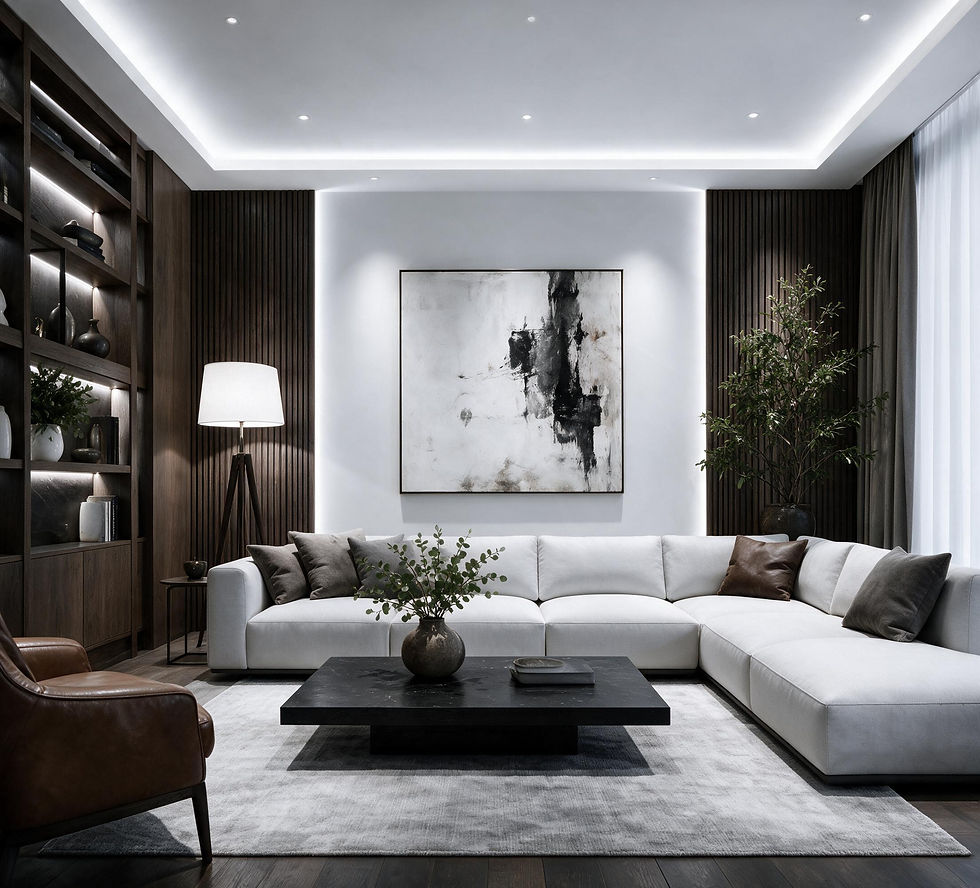
A common misconception is that adding more lights automatically creates a better home.
It doesn't.
Too much light can make a space feel harsh, flat and uncomfortable.
On the other hand, insufficient lighting leaves rooms feeling dull and impractical.
The goal isn't maximum brightness.
The goal is balance.
Good lighting directs attention, creates contrast, and allows each space to feel comfortable throughout the day.
3. Confusing Downlights and Spotlights

One of the most common misconceptions in home lighting is thinking that downlights and spotlights are the same thing.
They're not.
Although both are installed in the ceiling, they're designed for completely different purposes.
A downlight provides broad, even illumination, making it ideal for general lighting throughout a room.
A spotlight, on the other hand, has a narrower beam that focuses light on a specific area or feature, such as artwork, a textured wall, a display shelf, or a dining table.
Using spotlights as your main source of lighting can create harsh bright spots and dark shadows.
Using only downlights can make a room feel flat and lacking in depth.
Professional lighting designers know that it's not about choosing one over the other—it's about using each fixture where it performs best.
The right combination of downlights and spotlights creates a space that is functional, visually balanced, and full of character.
4. Treating Lighting as the Final Step
Many homeowners carefully select flooring, marble, cabinetry and furniture months in advance.
Lighting is often left until the final visit to a lighting shop.
This is one of the biggest renovation mistakes.
Lighting affects how every material, colour and texture appears inside your home.
Even premium finishes can look average under poor lighting.
Likewise, thoughtful lighting can elevate even a modest interior.
Planning your lighting early gives you far more flexibility and better results.
5. Copying Someone Else's Lighting Plan
Pinterest and Instagram are excellent sources of inspiration.
However, they shouldn't become your lighting blueprint.
Every home is unique.
Different ceiling heights.
Different room sizes.
Different natural daylight.
Different furniture layouts.
A lighting design that works beautifully in one home may perform completely differently in another.
The best lighting design is always customised to your space and lifestyle.
6. Forgetting That Great Lighting Is Something You Feel
The best lighting isn't necessarily the lighting people notice.
It's the lighting they experience.
A relaxing bedroom.
A welcoming entrance.
A comfortable dining room where family naturally spends more time together.
Thoughtful lighting influences mood in ways most people don't consciously recognise.
When it's designed well, people simply say,
"Your home feels amazing."
That's the real purpose of lighting.
7. Buying Lighting Without Professional Guidance
Most homeowners assume that buying lighting is simple.
Walk into a lighting showroom, choose a fixture you like, decide between warm white or cool white, and you're done.
In reality, that's only a small part of good lighting design.
Many homeowners are only asked one question:
"Do you prefer warm light or white light?"
While colour temperature is important, it's far from the only factor that determines how your home will look and feel.
A professionally planned lighting layout considers much more, including:
Beam angle
Fixture spacing
Brightness (lumens)
Glare control
Ceiling height
Furniture layout
Surface colours and materials
Purpose of each space
Layering of light
These decisions affect whether your room feels warm and inviting... or harsh and uncomfortable.
The problem is that once the wiring is installed and the ceiling is closed, changing your lighting design becomes expensive and disruptive.
That's why professional lighting designers don't start by asking,
"Do you want warm white or cool white?"
They start by asking,
"How do you want your home to feel?"
Because great lighting isn't about choosing a fixture.
It's about designing an experience.
The Truth About Great Lighting

People rarely regret investing in better lighting.
What they regret is discovering its importance after renovation is complete.
Once the ceiling is closed and the electrical works are finished, making changes becomes costly and disruptive.
That's why lighting should never be treated as an afterthought.
It should be part of the design process from the very beginning.
Before You Choose Your Lights, Choose Your Lighting Plan
At Virel Lighting, we believe we're not simply selling lighting fixtures.
We're helping homeowners create spaces that feel warm, comfortable and timeless.
Every home deserves a lighting design that matches the way you live—not a one-size-fits-all solution.
Whether you're renovating your first home or designing your forever home, our team can guide you through the planning process before any expensive mistakes are made.
Book Your Lighting Blueprint Session
If you're planning a renovation and want to avoid common lighting mistakes, we'd love to help.
A Lighting Blueprint Session will help you understand:
The right number of lights for each space
Where each light should be positioned
Which beam angles and colour temperatures suit your home
How to create a warm, premium atmosphere
How to avoid costly rewiring later
Before you buy your lights, design your lighting.
Contact Virel Lighting today and let's create a home you'll love coming back to every day.


Comments